October 23, 2026
A flickering light or unreliable outlet can seem easy to work around during a busy business day. When customers are waiting and employees have tasks to finish, arranging electrical repairs may slip behind more immediate demands. Yet a problem that interrupts work only occasionally can still signal an unsafe condition, and continued use may expose people and property to avoidable risks.
The difficulty is that an electrical problem's visible effects do not necessarily reveal its cause or severity. An outlet may stop working because of a damaged component, while repeated interruptions across an area may involve the circuit serving it. Professional diagnosis allows electrician companies to investigate those differences and determine what needs repair. Waiting until normal work becomes impossible leaves the business responding to a failure rather than addressing the warning that came before it.
Small Warning Signs Can Point to Serious Hazards
Electrical damage can develop while lights and equipment still receive power, so continued operation does not establish that a system is safe. Discoloration around an outlet, a burning odor near a switch, or buzzing at a panel may indicate a condition that needs prompt professional attention. Overheating, damaged connections, and deteriorating wiring can expose people and property to fire or shock hazards. A business does not need to experience a complete outage before taking those warning signs seriously.
Repeated exposure can also change how people respond to a problem. Employees may become accustomed to flickering lights or an unreliable switch, particularly when the same condition has been present for weeks. Familiarity can make a defect easier to overlook without making it any safer. Prompt reporting keeps a recurring concern from becoming an accepted part of the workday and gives the property owner an opportunity to arrange professional evaluation before someone else encounters the same hazard.
Repeated Breaker Trips Need an Explanation
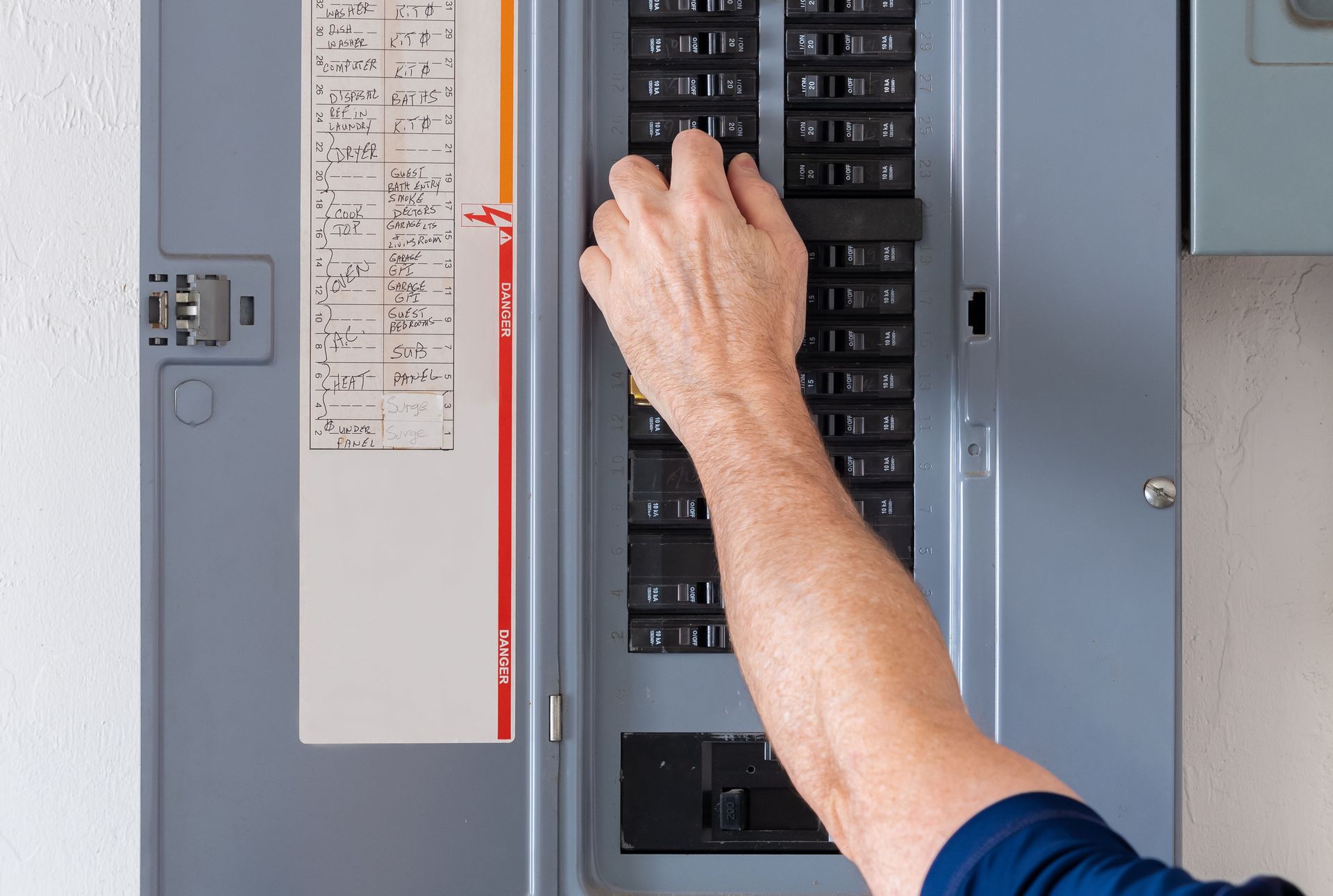
A circuit breaker interrupts power to protect a circuit under certain unsafe conditions, making repeated tripping a warning that deserves investigation. An overloaded circuit or another electrical fault may cause the breaker to operate even when the breaker itself is functioning correctly. A breaker that will not reset, visible burn marks, or unusual panel noises can also signal trouble. Treating each interruption as an isolated inconvenience leaves the reason for the power loss unresolved.
For example, a circuit that trips whenever particular equipment operates presents a different diagnostic question from a breaker that shows physical damage. Both situations warrant attention, but the same repair will not necessarily address them. By examining the panel and testing breaker functionality, electrician companies can determine whether repair or replacement is appropriate and investigate related circuit concerns. That distinction matters because restoring power without correcting the fault can leave the business facing the same interruption again.
Recurring Interruptions Affect the Entire Workday
An electrical interruption can disrupt a sequence of tasks rather than simply stop one device. A transaction may pause at an unavailable workstation, leaving a customer waiting while an employee finds another way to complete it. Elsewhere, unreliable lighting may interfere with work in an occupied area. When these incidents recur, employees must repeatedly redirect their attention from their responsibilities to the building's electrical problems. The effects can continue after power returns if interrupted work needs to be checked or repeated.
Workarounds can conceal how much the problem affects ordinary operations. An unused outlet or abandoned workstation may appear manageable until the business needs that space during a busier period. Addressing the defect helps restore the usefulness of the area instead of leaving daily arrangements dependent on which electrical components happen to function. The repairs electrician companies perform therefore support the way the workplace operates, even when the original problem appears limited to a single connection. Delaying attention preserves the obstacle and leaves its next disruption unpredictable.
Hidden Wiring Problems Leave Important Questions Unanswered
Some electrical concerns extend beyond what a person can see at a switch, outlet, or panel. Flickering lights and intermittent power may involve wiring connections concealed behind otherwise undamaged surfaces. A normal-looking cover cannot establish the condition of the wiring beneath it, and the absence of visible damage should not outweigh recurring symptoms. The location where a symptom appears is useful evidence, but it is only the starting point for determining the repair. Professional investigation helps determine whether the problem is confined to an accessible component or involves wiring serving the area.
For wiring defects, electrician companies can address localized damage or undertake more extensive rewiring when the condition of the system calls for it. That range does not mean every aging building needs complete rewiring, nor does one flickering light establish the scope of a project. The extent of the repair should follow the findings. An early assessment replaces speculation with information about what is affected, helping the owner understand the problem while avoiding assumptions based only on the building's age or the appearance of an outlet.
Faulty Outlets Leave Problems in Everyday Reach
Moving equipment away from a failed outlet may solve an immediate inconvenience while leaving the defective component available to someone else. A different employee or visitor may use it later without knowing that others have noticed a problem. Outlets that no longer hold plugs securely, show discoloration, or produce unusual sounds need professional evaluation rather than informal avoidance. The same applies to malfunctioning switches, which remain part of the space even when regular occupants have learned to work around them. Intermittent operation does not establish that a switch is safe simply because it works on the next attempt.
GFCI outlets illustrate why the response should address the cause as well as the symptom. These outlets interrupt power when they detect a ground fault, helping reduce the risk of electrical shock. Repeated tripping can involve moisture, a defective outlet, wiring issues, or a ground fault in connected equipment.
Circuit testing allows electrician companies to investigate those possibilities before determining whether the outlet needs repair or replacement. Replacing the component alone would not resolve every possible cause, which makes diagnosis important to the outcome. Timely attention reduces the chance that an unresolved problem will remain in everyday use simply because most people have started avoiding it.
Routine Testing Is Different From Responding to a Fault
According to IBIS World, commercial properties commonly follow testing intervals of three to five years. Periodic testing addresses conditions at scheduled intervals, while a newly reported malfunction creates a concern that already needs investigation. A future testing date cannot establish that a sparking outlet or repeatedly tripping breaker is safe to leave unresolved. A reported defect therefore calls for prompt attention from
electrician companies even when routine testing is not yet due.
The timing of a symptom also matters when deciding how urgently to respond. Burning smells, active sparking, and other dangerous electrical conditions need urgent attention rather than a place on a future maintenance calendar. Less dramatic symptoms still deserve reporting when they recur, even if they disappear before the next workday. Describing where the problem occurs and what happens helps an electrician evaluate the concern without requiring employees to investigate wiring or handle electrical components themselves.
A commercial property should support daily work without requiring people to accept recurring electrical problems as normal. Taking those concerns seriously gives owners a basis for informed decisions before an unresolved fault further restricts how the building can be used. At L.N.S. Electric, we diagnose and repair circuit breaker, switch, outlet, and wiring problems affecting commercial properties. Contact us about an electrical repair concern; we also provide 24/7 emergency electrical services for urgent situations.